




- Home
- Application
- AI and Semiconductor Applications
AI & Semiconductor Applications

The Core of Precision Die Casting for Automotive Safety Parts and AI Server Thermal Components: How Spindle Accuracy Determines Machining Success
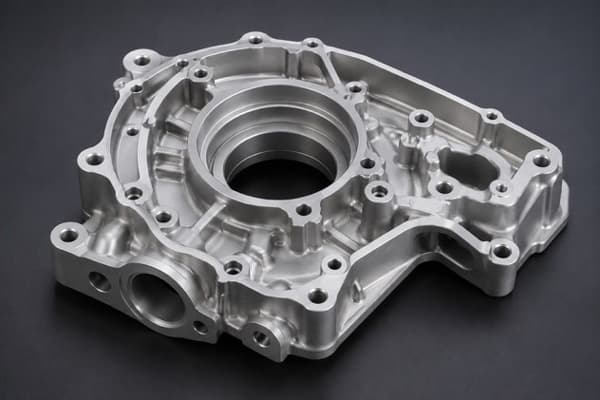
In the die-casting process, cast blanks naturally carry a certain risk of slight deformation due to cooling shrinkage and material characteristics. To transform these rough die-cast parts into automotive safety components or high-thermal-conductivity parts for AI servers, advanced CNC precision machining becomes essential. At the center of this process lies the dynamic stability of the spindle — the foundation of all tolerance control.
1. Beyond Dimensional Tolerances: Overcoming the "Precision Challenges" of Die-Cast Parts
The automotive industry and AI data centers demand more than components that simply "fit." They require extreme precision and consistency. During machining, even minor spindle runout can resonate with the internal stress of die-cast materials, causing deviations in the cutting path.
- Dynamic Tolerance Control: We do not merely pursue nominal drawing dimensions. Through high-rigidity spindle systems, we effectively counteract cutting resistance and maintain machining stability.
- Data-Driven Process Management: TRY Taiwan implements strict process monitoring to ensure that the CPK (Process Capability Index) of critical dimensions consistently remains above 1.33. For core structural parts used in AI servers, we target a CPK of 1.67, reducing defect probability to near zero across millions of parts.
2. Surface Micro-Geometry: The Key to Functional Performance
Before surface finishing processes such as brushing or coating, the original CNC-machined surface quality directly determines functional performance.
- Optimized Heat Dissipation: Thermal components for AI servers require ultra-flat contact surfaces to maximize heat transfer efficiency. Even microscopic spindle vibration can create chatter marks, forming tiny air gaps that reduce thermal conductivity.
- Automotive Sealing & Vibration Control: For automotive pump housings and valve components, spindle precision ensures micron-level flatness on sealing surfaces, preventing hydraulic leakage and minimizing mechanical wear.
3. The Chain Reaction Between Tool Wear and Delivery Stability
Insufficient spindle accuracy leads to uneven cutting forces on the tool edge. This not only increases tooling costs but may also induce "galling" (Festfressen) during metal machining, resulting in part failure and scrap.
- Uninterrupted Production: High-precision spindle systems extend tool life and reduce tool-change frequency, ensuring stable production flow.
- Cost Efficiency Returned to Customers: Reduced downtime and maintenance enable us to provide more competitive pricing while ensuring reliable on-time delivery for mass production orders.
4. Consistency in Mass Production
In large-scale die-casting production, the greatest risk is quality drift. Spindle stability is the key factor that ensures the first part and the millionth part remain equally precise.
- Thermal Compensation Technology: Our equipment features advanced cooling and thermal compensation systems that automatically offset spindle expansion during prolonged operation, maintaining dimensional stability even after 24 hours of continuous machining.
5. Why Choose an Integrated Die Casting and High-End CNC Machining Solution?
Many customers ask why die-cast parts require such high-specification machining equipment. Our answer is simple: responsibility and precision.
- Integrated Manufacturing Advantage: We consider CNC machining datums during the die-casting mold design stage, ensuring optimal cutting force distribution during spindle machining.
- Predictive Maintenance with Industry 4.0: Through Industry 4.0 monitoring systems, we continuously track spindle vibration and temperature data. This allows us to complete adjustments before problems occur, ensuring customers receive only stable, high-quality products.